

A maintenance contractor needs to troubleshoot a packaging machine. The production team needs the line to keep running. Before granting access, the plant should know exactly which machine the contractor needs, who approves the session, and when that access expires. Those questions are a practical starting point for operational technology (OT) security.

Map the plant before changing it
OT includes programmable logic controllers (PLCs), operator screens known as human–machine interfaces (HMIs), and supervisory control and data acquisition (SCADA) systems. These devices monitor and control physical processes. If a network change interrupts communication between a controller and an operator station, the consequences can include lost visibility, production downtime, or safety risks.
Start with existing drawings, switch records, and a walk-through with the controls team. Then use passive monitoring to observe traffic at selected points. IPTel highlights Cisco Cyber Vision as one option for identifying devices, mapping communications, and flagging changes such as an unexpected PLC program download. Passive monitoring only sees traffic that reaches its sensors, so confirm quiet devices and infrequent maintenance connections with plant staff.
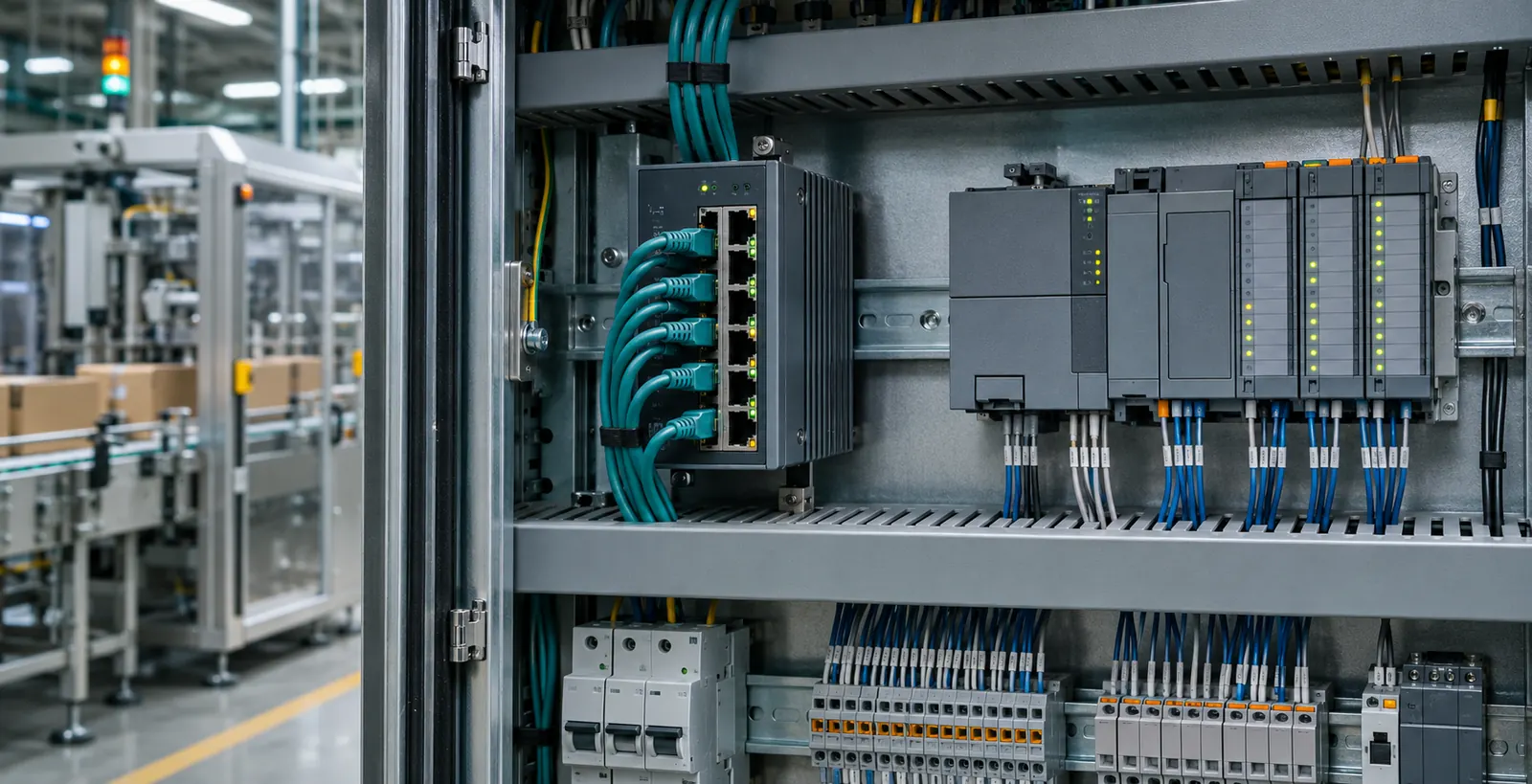
Build zones around how the plant works
The IEC 62443 zones-and-conduits model groups assets with similar security requirements into zones and defines the communication paths between them. In a packaging area, the PLCs and operator screens for one line might share a zone, while the warehouse and office networks have their own. Document the traffic each zone actually needs, then use firewalls or other policy controls to enforce those boundaries.
If corporate reporting needs production data, an industrial demilitarized zone (DMZ) can host an intermediary service. For example, the plant historian can send selected data to a replica in the DMZ, where the reporting application can retrieve it. The office network needs access to the replica, while access to the line controllers stays within the plant.
Give vendors access to the equipment they support
Give each technician a named account, require multifactor authentication, and send the connection through an approved remote access gateway. Limit access to the authorized equipment or engineering workstation, set an expiration time, and retain session logs. Cisco Secure Equipment Access is one option IPTel describes for applying this model to vendor support.
For the packaging line, the plant can approve a two-hour session to the engineering workstation used to service that line. The controls team can confirm whether any logic changes are expected and use the session record to investigate unexpected activity.

Test the change with the people who run the line
Pilot segmentation on one production cell during an approved maintenance window. Before making changes, back up network configurations, agree on rollback triggers, and have plant operators define what a successful test looks like. Validate routine production and less frequent workflows such as alarm reporting, shift handover, and vendor maintenance.
Once the pilot is stable, assign owners for alerts and exceptions. A PLC program download may be part of scheduled maintenance, so the controls team should check whether the timing and device match an approved change. Keep a tested plan for isolating OT from corporate IT if an incident requires it, and verify which plant services depend on that connection.
Start with one production area
Choose one line or facility and bring operations, controls, and IT together to review what is connected and which communications keep it running. An asset inventory, a map of required connections, and a list of current vendor access paths give the team a starting point for deciding what to secure first.
Planning a plant network refresh or reviewing vendor access? Talk with ITCSS about your industrial network and maintenance constraints.